Friends of Sebago Lake

Nebulae
Clusters
Star Fields
Comets
Solar System
Near Earth
Chile
Tools
Links
Home

News from Friends of Sebago Lake


The Lost Beaches of Sebago Lake:

A Movie by Friends of Sebago Lake


Home


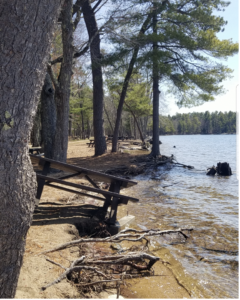
Severe Shoreline Erosion Hits Sebago Lake

Go to the Friends of Sebago Lake blog to see photos of recent, severe shoreline erosion at
Songo Beach, Sebago Lake State Park and Harmons Beach.


For comparison, see the photographic chronology of the destruction
of Songo Beach at Sebago Lake State Park (click over image to enlarge).

Please join Friends of Sebago Lake to stop the ongoing destruction of
New England's finest natural inland beaches.


Maine citizens for healthy lakes help defeat LD 1577

The Maine Legislature's Joint Natural Resources Committee has voted unanimously "ought not to pass" on LD 1577, a bill written by the Maine DEP which would have greatly restricted the legal rights of Maine citizens to restore Maine lakes to their natural levels and fluctuations to protect water quality. The Committee further instructed the DEP to hold public meetings with concerned citizens prior to submitting any future bills on this issue. Thanks go out to citizens from China Lake, Cobbosseecontee Lake and FOSL members who spoke at the public hearing in Augusta, offered written testimony and contacted their legislators. Without this citizen input, LD 1577 would likely have been approved.


FOSL member Steve Kasprzak
requests the Maine BEP
expedite completion of state review of new license
for Eel Weir Dam at outlet of Sebago Lake.
Read the request. (Warning: 6 mb PDF file.)


Friends of Sebago Lake Files
Formal Complaint with FERC for
Violation of License by S.D.Warren at Sebago Lake.


Steve Kasprzak of Friends of Sebago Lake
files extensive comments to FERC on efforts by
Portland Water District to downplay effects
of high lake levels on water quality at Sebago Lake.
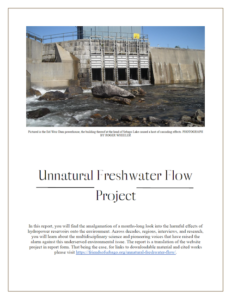
Read Steve's report. (Warning: 11.7 mb PDF file)


ACTION ALERT from Friends of Sebago Lake

Maine DEP Bill Will Severely Restrict Maine Citizens' Right to Protect Maine's Lakes.

Contact:Douglas Watts
Friends of Sebago Lake
info@dougwatts.com
207-622-1003

A bill written by the Maine Department of Environmental Protection, LD 1577, would severely limit the rights of citizens to protect Maine lakes and ponds from the harmful effects of artificial lake levels. The public hearing was held on the bill by the Legislative Natural Resources Committee on Friday, Jan. 8, 2009. The full text of the bill is here. FOSL's written testimony is here.

LD 1577 does three things.

1. LD 1577 removes the existing requirement that Maine's citizen environmental board, the Maine Board of Environmental Protection, hear requests by Maine citizens to adjust water levels and outflows from lakes and ponds that harm fish and wildlife. The bill prohibits the BEP from hearing any of these requests and makes the DEP Commissioner the sole decision-maker for all petitions regarding lake and pond water level and outflows.

2. LD 1577 allows the DEP Commissioner to summarily dismiss any water level or flow change request unless the petitioners have already made a "good faith" effort to mediate their concerns with other lake or streamfront property owners. This requirement is unworkable in practice because the bill contains no definition of what is a "good faith" effort and what is not. As written, the bill leaves it up to the DEP Commissioner to decide what is a "good faith" effort and what is not, and gives him or her the authority to dismiss any water level or flow petition on this basis, without reviewing its merits.

Maine's existing water level law (38 MRSA §840 ¶4) states that citizens may petition the BEP to adjust water levels and minimum flow requirements "necessary for the maintenance of fish and wildlife habitat and water quality." Lake and pond water quality is protected by law and all lakes and ponds in the state must attain their standards of classification (38 MRSA §465-A). It is unprecedented for the Maine DEP to require citizens to "pre-negotiate" with other lakefront residents when a lake level is directly harming water quality.

3. LD 1577 allows the DEP Commissioner to summarily dismiss any petition to adjust lake and pond water levels and outflows if he or she determines the petitioners do not provide "substantial evidence." This, in itself, is not a bad thing. However, because the bill states the Commissioner may do this "without prejudice," meaning the petitioners are free to re-submit their petition, LD 1577 will prevent citizens from appealing a dismissal to Superior Court because the dismissal would not be a "final agency action." Under Maine law, only final agency actions may be appealed. In effect, the DEP Commissioner could deny any and all petitions for any reason or no reason at all, and petitioners would never be able to seek judicial review. While this may not be the intent of the DEP, the language in LD 1577 would allow the DEP to argue this point in court and most likely win.

WHY THESE CHANGES MATTER:

In their natural state, Maine's lakes and pond rise and fall in response to snowmelt and rain. They generally reach a peak water level in late May, after snowmelt and spring rains, and fall during the summer and fall, until they reach their lowest levels in winter. Wetlands around these ponds depend on this annual cycle to remain healthy and diverse, as does the fish and wildlife in the ponds and their associated wetlands. However, since the 19th century, most Maine lakes and ponds have had dams built at their outlets which regulate their levels and outflows. These dams, originally built to control outflow for sawmills and gristmills downstream, now control the level of Maine lakes and ponds. The sawmills and grist mills are now gone, but the dams remain, and in most cases, their operation causes these lakes and ponds to no longer rise and fall in a manner that allows the lakes and ponds and associated wetlands to function naturally. These changes have had serious negative effects on the water quality of the lakes, ponds and wetlands and the ability of fish and wildlife to live in them.

Under existing law, citizens may petition the Maine BEP to establish or adjust the water level or outflow of a lake or pond controlled by a non-hydro dam. This petition right is rarely exercised but has been recently, and with much press attention, at China Lake in central Maine. The level of most lakes and ponds in Maine are controlled by a dam at their outlet, which is usually owned and operated by the town or a lakefront property owners' association. The level of most lakes and ponds in Maine controlled by outlet dams is not natural, ie. it does not mimic the annual rise and fall that would occur solely due to precipitation. Instead, the levels are artificially manipulated to provide "high water" throughout the summer recreation months for the benefit of lakefront property owners who wish to maintain docks with boats in front of their homes. Unfortunately, this artificial manipulation often has severe negative effects on fish and wildlife and water quality on the lakes and their associated wetlands which have evolved under a natural, uncontrolled regime. The ecological effects of these artificial manipulations have only been studied in detail by wetland and aquatic scientists during the past several decades.

As written, LD 1577 severely restricts the existing rights of Maine citizens to seek adjustments to lake levels for the purpose of improving the health of the lakes and their fish and wildlife populations. LD 1577 was written by the Maine DEP, ie. it is labelled a "Department Bill," and FOSL is now trying to learn from Maine DEP senior staff member Andrew Fisk exactly why the DEP is seeking these changes to the law.

WHAT YOU CAN DO:

1. Please circulate this alert to people you know who care about Maine's lakes and ponds.
2. Please call Andrew Fisk at the Maine DEP at 287-7671, who is the DEP point person on this bill.
3. Please call your local senator and representative.
4. Please contact me, Douglas Watts at Friends of Sebago Lake, for more information as it develops.


Why the Portland Water District is Right -- And Wrong.


Four Years and Still Waiting

Nov. 29, 2009 is the 4th anniversary of FERC's Final Environmental Assessment for Sebago Lake and Eel Weir Dam.

Friends of Sebago Lake demands a Supplemental Environmental Analysis (link to PDF file).


Join Friends of Sebago Lake

Friends of Sebago Lake is a group of volunteers working
to protect the health of Sebago Lake,
Maine's deepest lake and second largest.

Please join us in our efforts.

You can make a tax-deductible donation via PayPal by clicking here.

Or by writing to: Friends of Sebago Lake, PO Box 561, Fryeburg, ME 04037